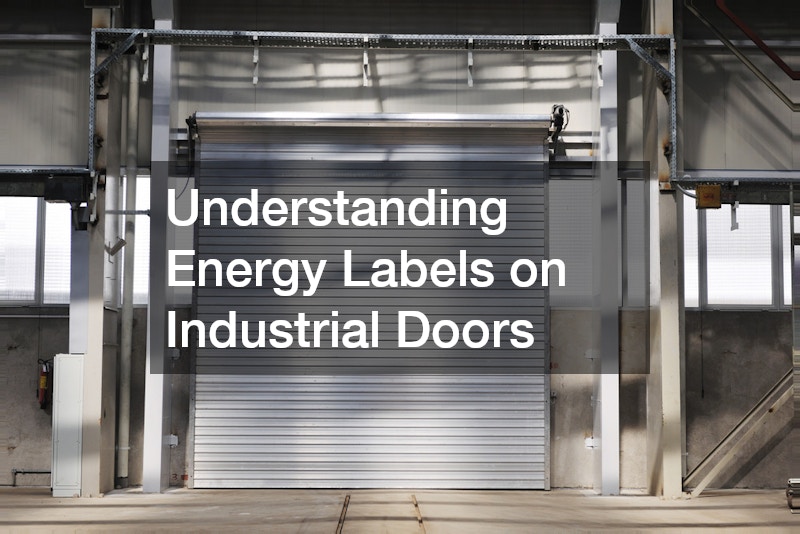

As industries strive for greater efficiency and sustainability, the importance of understanding energy labels on industrial doors cannot be overstated. These labels provide key information about the door’s insulation properties, air leakage, and overall energy performance, which can significantly impact energy costs and environmental footprint. By breaking down the components of energy labels, businesses can make informed decisions, ensuring they select doors that not only meet their operational needs but also align with their energy-saving goals.
This blog aims to provide a comprehensive overview of how to interpret these labels and why they matter in today’s industrial landscape.
The Role of Energy Labels in Sustainability
Energy labels play a crucial role in promoting sustainability within industrial settings. These indicators serve as a benchmark for energy efficiency, allowing companies to minimize energy consumption and reduce carbon emissions. By choosing doors with high energy ratings, industries can contribute to a more sustainable future. Additionally, doors that are energy efficient help in maintaining a stable indoor climate, leading to less dependency on heating, ventilation, and air conditioning systems. This is particularly important in large facilities where even slight changes in energy consumption can result in significant cost savings.
Deciphering the Energy Label Components
Understanding what each element of an energy label represents is essential for making informed purchasing decisions. Energy labels typically provide information on thermal transmittance, air leakage, and energy performance index. Thermal transmittance, or U-value, measures the rate of heat transfer through the door. A lower U-value indicates better insulation and energy efficiency. Additionally, air leakage rating shows how much air passes through the door when it’s closed, with lower values signifying tighter seals and better performance. Finally, the energy performance index offers an overall score of the door’s efficiency, combining all other metrics into a singular, easy-to-read value.
Impact on Energy Consumption
Industrial doors with high energy efficiency ratings can have a substantial impact on reducing a facility’s energy consumption. Facilities with doors that exhibit low thermal transmittance and minimal air leakage can maintain more consistent internal temperatures, leading to reduced reliance on climate control systems. According to industry reports, energy-efficient doors can reduce energy costs by up to 10% annually. This cost reduction is not only financially beneficial but also supports organizational goals related to sustainability and energy conservation. Ensuring doors are properly maintained and operational also maximizes these benefits, as poor maintenance can negate potential energy savings.
Choosing the Right Energy-Efficient Door
When selecting industrial doors, consideration of energy labels should be a primary focus. Companies should evaluate the specific needs of their facilities, such as the frequency of door usage, climate, and security requirements, when assessing energy labels. For instance, doors used in climates with extreme temperatures will benefit more from lower U-values. Furthermore, in high-traffic areas, low air leakage values are crucial to prevent unnecessary energy loss. Working with manufacturers who prioritize energy efficiency in their designs can ensure that businesses receive a product that is both high-performing and environmentally friendly.
Future Trends in Energy Efficiency
The landscape of energy efficiency in industrial doors is continually evolving, with emerging trends influencing how energy labels are perceived and utilized. Innovations such as smarter materials, integrated sensors for real-time energy monitoring, and advanced sealing technologies are on the rise, promising even greater energy savings. The implementation of stricter regulations and standards across the globe pushes manufacturers to innovate and enhances the accuracy and relevance of energy labels. Consequently, industrial doors are becoming more of a strategic asset in energy management, rather than just a functional entryway. Companies are encouraged to stay ahead by monitoring these trends and adapting their infrastructure accordingly to maximize efficiency and sustainability.
In conclusion, understanding energy labels on industrial doors is an essential component of operational efficiency and sustainability in industrial settings. These labels provide indispensable information that aids in the selection of doors that not only fulfill functional needs but also enhance energy conservation efforts. By prioritizing energy efficiency, industries can achieve substantial cost reductions, contribute to environmental sustainability, and comply with evolving regulations. As technology continues to advance, the features of energy-efficient doors will continue to improve, offering even greater benefits. Therefore, it’s imperative for businesses to remain informed about energy label components and actively seek doors that meet high energy criteria.