
The construction and landscaping industries, among others, often require the use of heavy machinery to complete tasks efficiently. For businesses and contractors, the decision between purchasing or renting heavy equipment like excavators, loaders, and cranes can significantly impact budgets and project timelines. Heavy equipment rental offers an alternative pathway, providing access to the necessary tools without the financial burden of a full purchase.
While owning equipment might seem advantageous due to perpetual availability, the substantial initial investment and maintenance costs can be prohibitive for many. This is where renting comes into play; it allows businesses to pay for equipment only when needed.
This can be a wiser option for those aiming to keep overhead costs low while still using state-of-the-art machinery for their projects.
Additionally, renting can provide flexibility in choosing the most appropriate equipment for specific projects. Construction sites differ greatly, and renting allows contractors to select machinery tailored to the job at hand. With advancements in technology, rental services often have the latest equipment models equipped with modern features, enhancing work efficiency.
Factors to Consider When Opting for Rental
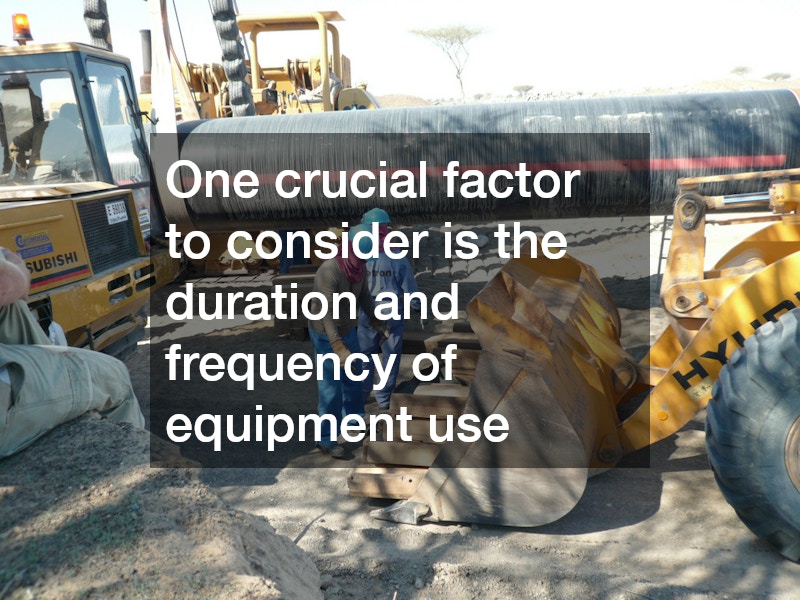
One crucial factor to consider is the duration and frequency of equipment use. If machinery is only required for a short-term project or sporadic use, renting is often more cost-effective than purchasing. By renting, companies can avoid substantial costs of ownership like storage, maintenance, and depreciation.
Another consideration is the type of project at hand. Some projects may demand specialized equipment that the company doesn’t currently own, making rental the most practical solution. Renting provides access to a diverse range of equipment without the long-term commitment.
Budget constraints also play a pivotal role in the decision-making process. Allocating funds to rent equipment can free up capital for other critical operations or investments. Furthermore, rental expenses are predictable and manageable, while purchasing equipment often leads to unexpected repair and maintenance costs.
Understanding Cost Implications
The financial implications of renting versus purchasing equipment extend beyond immediate costs. Owning equipment incurs lifelong expenses, including maintenance, repairs, and storage. In contrast, heavy equipment rental usually encompasses many of these expenses, with maintenance often being the responsibility of the rental company.
Furthermore, renting avoids the risks associated with equipment obsolescence. Heavy machinery technology continually evolves, and owning outdated equipment can diminish productivity and competitiveness. With a rental approach, businesses can access the latest models without committing to long-term ownership.
Another financial advantage of renting is improved balance sheet management. Renting heavy equipment does not appear as a liability on a company’s balance sheet, thus preserving borrowing capacity. For companies needing to maintain favorable financial ratios, this can be particularly advantageous.
Advantages of Flexibility in Equipment Rental
Flexibility is one of the most appealing aspects of heavy equipment rental. Projects often need diverse machinery, and renting allows companies to select exactly what is required at the time. With the ability to rent across different timelines, firms can scale operations up or down easily to meet project demands.
This flexibility also extends to being able to trial equipment. Businesses can test various models to ascertain which suits their needs best before making any possible purchase. This minimizes the risk associated with buying machinery outright that may not meet the project’s requirements or company standards.
Access to a wide array of machinery options can improve project quality and efficiency. Having the exact machinery tailored to specific project requirements ensures optimal performance and outcomes. Additionally, rental agreements can include professional support and training, which enhances capability and safety on the job site.
Deciding whether to opt for heavy equipment rental depends on numerous factors, including project needs, budget, and future planning. Rental offers several benefits, including financial savings, access to the latest equipment models, and increased operational flexibility. The ability to scale efficiently allows companies to meet the dynamic demands of any given project.
While ownership might be the right choice for businesses with consistent long-term equipment needs, rental provides various advantages for short-term projects and temporary needs. Understanding and evaluating these factors is crucial to determining the best approach for any operation. The accessibility and flexibility offered by heavy equipment rental can lead to improved project outcomes and greater financial efficiency.
Heavy equipment rental can be the key to unlocking both financial and operational efficiency in the ever-evolving field of construction and development. Adapting to industry changes by leveraging rental services can be a strategic move to stay competitive in today’s market while maintaining a strong bottom line.