
Commercial construction projects represent some of the largest and most complex investments a business owner can make. Whether you are developing a distribution center, manufacturing facility, office complex, retail property, or industrial site, the decisions made during planning and construction will directly affect operational efficiency, compliance, maintenance costs, and long-term profitability.
Unlike residential projects, commercial developments involve extensive coordination between architects, engineers, contractors, inspectors, regulators, and specialty service providers. Every stage of the process carries financial and operational implications. A poorly planned facility can create ongoing maintenance challenges, increase energy costs, reduce workflow efficiency, and expose owners to regulatory or liability risks.
This guide breaks down the major components of commercial building development and long-term facility management. From selecting the right structural system and completing site preparation to managing vendors and maintaining infrastructure, business owners and facility managers will gain a practical overview of what it takes to protect and maximize a commercial property investment.
Why Commercial Building Projects Demand a Strategic Approach
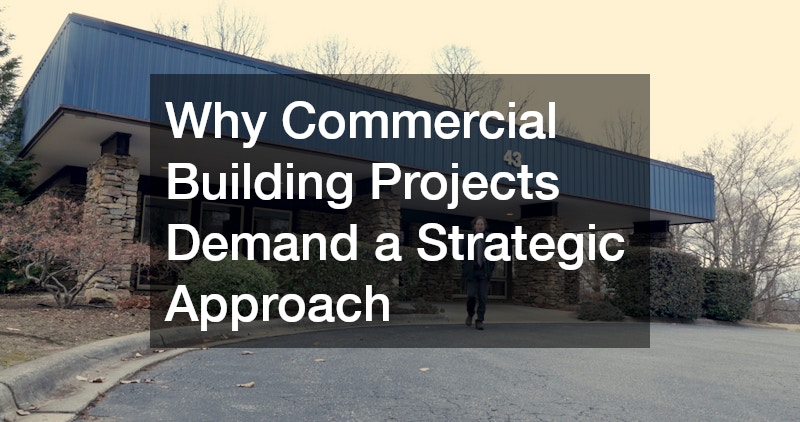
Commercial construction is fundamentally different from residential development because the stakes are higher, the systems are more complicated, and the operational demands are far more intensive. A commercial facility must support business continuity, employee productivity, customer access, equipment performance, safety compliance, and future scalability.
One of the biggest mistakes business owners make is focusing too heavily on upfront construction costs while underestimating lifecycle expenses. Decisions involving building materials, infrastructure systems, drainage, HVAC layouts, access points, and structural design can influence maintenance requirements and utility costs for decades. What appears inexpensive initially may become expensive over time due to frequent repairs, inefficient systems, or limited adaptability.
Strategic planning also matters because commercial properties are often subject to stricter regulations and inspections. Building codes, ADA requirements, fire safety standards, stormwater regulations, and environmental compliance all add layers of complexity that require proactive management. Delays in permitting or overlooked compliance issues can significantly increase project timelines and budgets.
Modern commercial projects also require coordination across multiple trades and suppliers. Structural engineers, electricians, plumbing contractors, roofing specialists, and technology providers must all work within an integrated construction timeline. Without strong project management, communication breakdowns can create expensive delays and rework.
Choosing the Right Structure for Your Business Needs
Selecting the appropriate building type is one of the most important decisions in any commercial development project. The structure must align with operational requirements, industry demands, storage needs, employee capacity, and future expansion plans.
For many industries, metal buildings have become increasingly popular because of their durability, flexibility, and cost efficiency. Warehouses, agricultural facilities, manufacturing plants, logistics centers, and automotive operations frequently use metal buildings due to their ability to support large open floor plans and rapid construction timelines.
Compared to traditional construction methods, prefabricated structural systems can streamline installation and reduce labor costs. Components are often manufactured off-site in controlled environments, which improves consistency and minimizes weather-related delays. Businesses that need to scale quickly often prefer these systems because they allow faster occupancy and operational readiness.
Durability is another major advantage. Commercial properties are exposed to heavy use, severe weather conditions, and ongoing operational wear. Steel-framed structures typically resist pests, moisture damage, and fire risks more effectively than many alternative materials. In regions prone to storms or temperature extremes, structural resilience becomes even more important.
However, selecting the right building structure goes beyond material choice alone. Businesses must evaluate ceiling heights, floor load capacities, dock access, ventilation needs, and specialized operational requirements. A manufacturing company may prioritize crane support and equipment spacing, while a retail operation may focus more heavily on customer accessibility and visual presentation.
Laying the Groundwork: What Happens Before Construction Begins
Before construction crews arrive on-site, extensive planning and preparation must take place. The pre-construction phase often determines whether a project stays on schedule and within budget.
Zoning and permitting are among the first major hurdles. Commercial developments must comply with local land use regulations, setback requirements, occupancy standards, environmental rules, and infrastructure guidelines. Depending on the project scope, approvals may involve planning commissions, environmental agencies, utility providers, and municipal departments.
Land surveys are critical during this stage because they establish accurate property boundaries, elevation details, and topographical conditions. Survey data influences drainage planning, utility placement, grading requirements, and structural engineering decisions. Inaccurate site information can create expensive problems later in the project.
Site preparation is another foundational step that directly impacts construction quality and long-term structural stability. Proper grading ensures adequate drainage and prevents water accumulation around the building foundation. Excavation crews may also remove unstable soil, clear vegetation, relocate debris, and compact the ground to meet engineering specifications.
Infrastructure planning is equally important. Developers must confirm access to utilities such as water, sewer, electrical service, telecommunications, and gas lines before construction begins. Delays in utility coordination can stall projects and create unexpected costs.
Access logistics also require attention during the planning phase. Commercial properties often need designated delivery zones, parking areas, emergency vehicle access, and traffic flow planning. For industrial facilities, transportation access may influence supply chain efficiency and shipping costs long after construction is complete.
The Role of Precision Manufacturing in Modern Construction
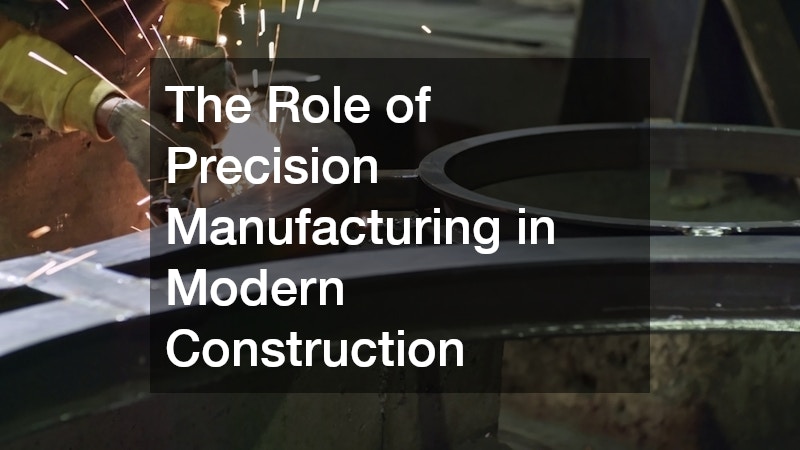
Commercial construction increasingly relies on advanced manufacturing processes to improve accuracy, consistency, and structural performance. Precision fabrication has transformed the way modern facilities are designed and assembled.
A steel fabrication service plays a central role in producing structural components used in commercial and industrial projects. Steel beams, columns, trusses, stair systems, and support assemblies are fabricated according to exact engineering specifications before arriving at the construction site.
Off-site fabrication improves quality control because components are manufactured in controlled environments using specialized equipment and standardized procedures. This reduces material waste, improves precision, and shortens installation timelines. Fabricated steel components can also support larger spans and heavier loads than many alternative building materials.
Technology has further enhanced construction accuracy through automation and digital modeling. Many fabrication facilities now use advanced software to integrate engineering plans directly into production equipment. This reduces measurement errors and improves alignment between design intent and finished components.
A CNC machining service may also support commercial construction projects requiring specialized or highly precise parts. Custom brackets, mounting systems, machine housings, hardware components, and architectural details often require exact tolerances that conventional fabrication methods cannot consistently achieve.
Sourcing Materials and Hardware at Scale
Commercial construction projects involve large-scale procurement operations that require careful coordination across multiple suppliers and timelines. Delays involving even small components can disrupt entire phases of construction.
Material sourcing strategies should prioritize reliability, consistency, and quality assurance. Contractors and developers often manage procurement schedules months in advance to account for lead times, transportation logistics, and inventory availability.
One frequently overlooked area involves structural hardware and fastening systems. A dependable industrial fastener supplier is essential because bolts, anchors, screws, rivets, and specialty fasteners play a critical role in structural stability and system performance.
Commercial projects often require thousands of fastening components across structural steel assemblies, mechanical systems, roofing installations, and infrastructure equipment. Inferior or incompatible fasteners can compromise safety, accelerate corrosion, or lead to premature failures.
Quality control standards matter significantly during procurement. Materials should comply with engineering specifications, industry certifications, and applicable building codes. Reputable suppliers typically provide documentation verifying strength ratings, corrosion resistance, material composition, and manufacturing standards.
Navigating Environmental Obligations Before and During Construction
Environmental compliance is now a central component of commercial development. Regulatory requirements continue to expand as governments increase oversight related to land use, emissions, stormwater management, contamination risks, and sustainability practices.
Business owners who overlook environmental obligations can face project delays, fines, cleanup costs, and reputational damage. Early planning is essential to avoid regulatory complications during construction.
An environmental consulting firm can help developers identify compliance risks before major work begins. Environmental consultants typically conduct site assessments, regulatory reviews, contamination evaluations, and permitting support to ensure projects meet local, state, and federal standards.
One of the most common early-stage assessments involves evaluating soil and groundwater conditions. Former industrial properties, gas stations, manufacturing sites, and agricultural land may contain contaminants that require remediation before development can proceed safely.
Environmental assessments also help identify wetlands, protected habitats, drainage concerns, and hazardous materials that could affect project design. In some cases, developers may need to adjust building layouts or implement mitigation strategies to satisfy environmental agencies.
Critical Infrastructure Inspections You Can’t Afford to Skip
Infrastructure inspections are essential for identifying hidden risks before they become expensive operational or legal problems. Older commercial properties and redevelopment sites often contain underground systems or legacy infrastructure that require careful evaluation.
Underground utility mapping is especially important before excavation or redevelopment begins. Accidentally damaging utility lines can halt projects, create safety hazards, and trigger costly repairs or lawsuits. Locating water lines, electrical conduits, gas lines, and telecommunications infrastructure reduces operational risk during construction.
For older industrial or commercial sites, an oil tank testing service may be necessary to assess underground or above-ground storage systems. Aging tanks can develop leaks that contaminate soil and groundwater, potentially exposing property owners to significant remediation costs and environmental liability.
Testing procedures may involve pressure testing, leak detection technology, soil sampling, or corrosion analysis. Early identification of tank issues allows property owners to address problems before contamination spreads or regulatory agencies become involved.
Infrastructure inspections also extend to drainage systems, sewer connections, fire suppression equipment, and structural foundations. Deferred maintenance or undocumented modifications can create hidden vulnerabilities that affect occupancy and insurance coverage.
Keeping Building Systems Running After Opening Day
Many business owners focus intensely on development costs but underestimate ongoing maintenance requirements. Mechanical failures, plumbing issues, HVAC breakdowns, and infrastructure deterioration can disrupt operations and generate expensive emergency repairs.
Preventive maintenance programs are one of the most effective ways to control long-term facility costs. Scheduled inspections help identify wear and performance issues before systems fail unexpectedly.
A commercial pump service provider may play an important role in maintaining HVAC systems, water circulation equipment, drainage systems, industrial processing equipment, and plumbing infrastructure. Pumps are often central to fluid movement throughout commercial facilities, and failures can affect heating, cooling, sanitation, and production operations.
Routine pump inspections typically include vibration analysis, seal checks, motor evaluations, lubrication maintenance, and flow testing. Proactive servicing can extend equipment lifespan while reducing energy consumption and operational downtime.
Maintenance planning should also include roofing systems, electrical infrastructure, elevators, emergency generators, fire suppression systems, and security technology. Creating detailed service schedules improves accountability and helps facility managers prioritize repairs strategically.
Protecting the Building Envelope: Roofs and Entry Points
The building envelope serves as the primary barrier between interior operations and external environmental conditions. Roofs, doors, windows, and exterior systems all influence energy efficiency, weather protection, security, and occupant comfort.
Working with experienced commercial roofing companies helps ensure that roofing systems are installed and maintained according to commercial performance standards. Roofing contractors should understand drainage design, insulation systems, membrane compatibility, and local climate considerations.
Routine roof inspections are essential for identifying early signs of deterioration. Ponding water, flashing damage, membrane separation, and drainage blockages can gradually lead to larger structural problems if ignored.
Energy efficiency is another major consideration. Modern commercial roofing systems often incorporate reflective materials, insulation upgrades, and ventilation improvements that reduce heating and cooling costs.
Entry systems also play a critical role in commercial facility performance. Doors affect security, accessibility, workflow efficiency, fire safety, and climate control. High-traffic commercial properties place significant wear on entry systems, loading dock doors, and automated access equipment.
A commercial door repair specialist can address operational issues such as damaged tracks, malfunctioning openers, broken seals, alignment problems, and access control failures. In many cases, targeted repairs are more cost-effective than full door replacement.
Building a Long-Term Maintenance and Vendor Strategy
Commercial properties should be viewed as long-term operational assets rather than one-time construction projects. Ongoing maintenance, vendor management, and strategic planning are essential for protecting the value and functionality of the facility.
One of the most effective strategies for business owners is developing a trusted network of contractors, inspectors, and service providers. Reliable vendors who understand the property’s systems and operational requirements can respond more efficiently when issues arise.
Long-term vendor relationships also improve consistency and accountability. Contractors familiar with the building history can often identify recurring issues faster and recommend more effective long-term solutions.
Facility managers should maintain organized records for warranties, inspections, maintenance schedules, repair histories, and compliance documentation. Strong recordkeeping supports budgeting, insurance claims, regulatory audits, and future capital planning.
Budget forecasting is another critical component of long-term property management. Major systems such as roofing, HVAC equipment, pumps, paving, and structural components eventually require upgrades or replacement. Planning helps businesses avoid sudden financial strain.
Business owners who approach development strategically are better equipped to control operational costs, minimize disruptions, and protect their investment over time. Careful planning, qualified vendors, proactive inspections, and preventive maintenance all contribute to stronger building performance and reduced long-term risk.
Whether developing a new facility or managing an existing property, treating commercial real estate as a long-term business asset is essential. The organizations that invest in smart planning, reliable infrastructure, and consistent maintenance are often the ones best positioned for operational stability and sustainable growth.